

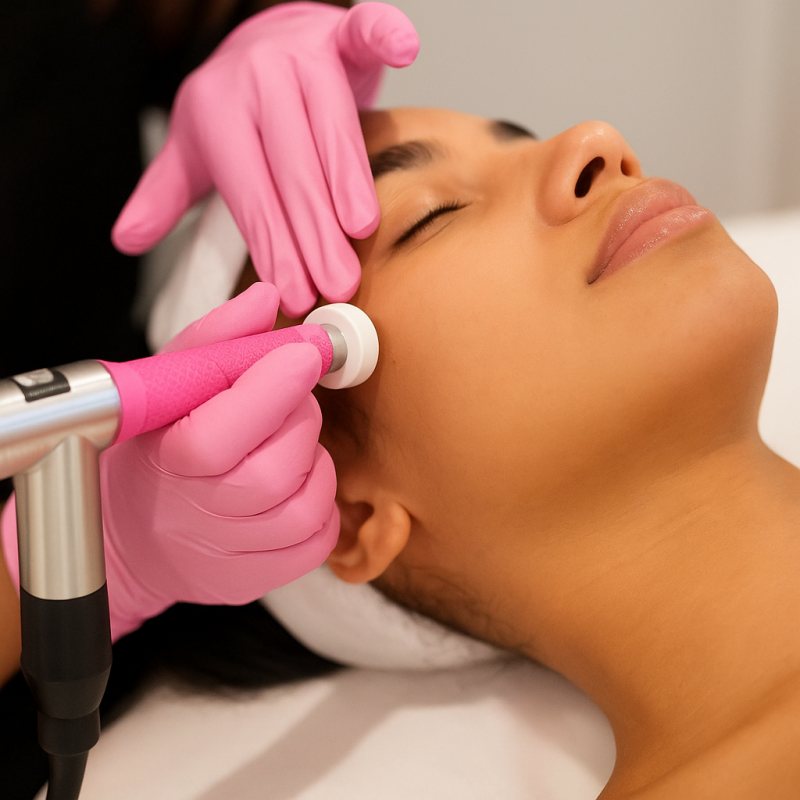
- Collagen Induction Therapy: Stimulates the production of collagen and elastin, essential proteins for skin firmness, elasticity, and texture.
- Reduces Acne Scars & Scars: Breaks down scar tissue and promotes new skin tissue, particularly effective for reducing the appearance of acne scars and other surgical/accident scars.
- Minimizes Wrinkles and Fine Lines: Firms and tightens the skin, reducing the visibility of aging signs.
- Shrinks Large Pores: Boosts collagen production, making the skin plumper, which helps to close or tighten enlarged pores.
- Improves Product Absorption: Creates micro-channels that allow topically applied serums and skincare products to penetrate deeper and work more effectively.
- Evens Skin Tone & Texture: Treats hyperpigmentation, reduces skin discoloration, and smoothens rough texture.
- Reduces Stretch Marks: Encourages tissue remodeling, helping to diminish the appearance of stretch marks.
- Side Effects: Common, temporary side effects include redness, minor swelling, bruising, and a sunburn-like sensation lasting a few days.
- Treatment Sessions: Multiple sessions are often required to achieve optimal, long-lasting results.
- Safety: Considered safe for most skin tones, but it is best performed by qualified professionals to avoid infection or improper healing.
Microneedling typically involves 24 to 72 hours of downtime, characterized by skin redness, sensitivity, and mild swelling similar to a sunburn. While the face usually heals within 3 to 7 days, intense treatments may require longer. Most people can return to daily activities immediately, but should avoid strenuous exercise, direct sun, and makeup for 24-48 hours.
Key Aspects of Downtime and Recovery:
-
- Initial 24-48 Hours: Intense redness and sensitivity are common. Users may experience mild swelling, bruising, or dryness.
- Days 3-5: Redness typically subsides, and slight flakiness or peeling may occur.
- Activity Restrictions: Avoid makeup for at least 24 hours to prevent clogged pores. Avoid harsh skincare products (retinols, acids) and direct sun for at least a week.
- Aftercare: Use a gentle cleanser, gentle moisturizer, and sunscreen daily.
- Long-Term Results: Full skin regeneration takes about 4 weeks, with optimal results appearing 3 months after a series of treatments.
Microneedling can cause mild to moderate discomfort, often described as a scratching, vibrating, or prickly sensation, but it's generally well-tolerated, especially with professional numbing creams, and the feeling is temporary, not severe pain. Pain levels vary by individual and body area (bony spots like the forehead are more sensitive), but most find the temporary discomfort worth the benefits, feeling pressure rather than sharp pain.
Pressure & Scratching: Many compare it to a mild electric toothbrush or fine sandpaper rubbing the skin.
Microneedling with Hyaluronic Acid (HA) is a minimally invasive, non-surgical cosmetic procedure that combines collagen induction therapy with deep hydration. It works by using a device with fine needles to create controlled micro-injuries in the skin, which triggers the body's natural healing response to boost collagen and elastin production.
By applying hyaluronic acid—a potent humectant that holds up to 1,000 times its weight in water—during or immediately after the procedure, the serum penetrates the newly created micro-channels, deeply hydrating and plumping the skin from within.
Key Benefits
- Reduced Fine Lines and Wrinkles: Stimulates collagen and elastin to firm the skin.
- Intense Hydration: Hyaluronic acid plumps the skin, reducing "crepey" texture.
- Improved Skin Texture and Tone: Addresses acne scars, pock marks, enlarged pores, and hyperpigmentation.
- Faster Healing and Reduced Downtime: HA soothes the skin and accelerates the repair process.
- Safe for All Skin Types: Suitable for most, with minimal risks, especially when performed by a professional.
How the Procedure Works
- Preparation: The skin is cleansed, and a topical numbing cream is applied to ensure comfort.
- Needling & Serum Application: A microneedling device (pen or roller) creates microscopic punctures (micro-channels). A pure hyaluronic acid serum is applied to the skin, which helps the device glide (often called "wet needling") and allows the serum to travel directly into the dermis.
- Healing Process: The micro-injuries stimulate collagen production, while the HA deeply hydrates the skin.
Recovery and Aftercare
- Downtime: Typically, mild redness, swelling, or tenderness lasts for 24 to 48 hours.
- Post-Treatment Care: It is crucial to keep the skin hydrated with a sterile HA serum and to avoid harsh active ingredients (like Retin-A or Vitamin C) for 48-72 hours.
- Sun Protection: Daily sunscreen application is essential to protect the sensitive, healing skin.
Number of Sessions
For best results, a series of 3-6 treatments is generally recommended, spaced 4-6 weeks apart. Results are long-lasting when combined with a proper skincare routine.
Microneedling with Platelet-Rich Plasma (PRP) offers superior, longer-lasting rejuvenation (12-18 months) for deep wrinkles and scarring by using growth factors, while Hyaluronic Acid (HA) provides immediate hydration, glowing skin, and, for a lower cost, is ideal for milder concerns. PRP speeds healing with fewer sessions, whereas HA serves as a soothing, natural-based serum.
Key Differences Between Microneedling Additives
- PRP (Platelet-Rich Plasma):
- Mechanism: Uses the patient’s own blood platelets to stimulate intense collagen and tissue repair.
- Best For: Deep wrinkles, significant acne scars, sagging skin, and hair loss.
- Results: Last 12 to 18 months, often requiring 3-4 sessions for optimal results.
- Pros/Cons: Highly effective, natural (hypoallergenic), but more expensive and requires a blood draw.
- HA (Hyaluronic Acid):
- Mechanism: Hydrates, plumps, and smooths skin texture immediately.
- Best For: Overall skin radiance, dullness, fine lines, and increased hydration.
- Results: Last 1-3 months; it is often used as a daily serum, making it a better option for those seeking a quick "glow".
- Pros/Cons: Lower cost, no blood draw needed, excellent for hydration, but less effective for deep scarring than PRP.
Which One to Choose?
- Choose PRP if your main goals are treating significant skin damage, deep scars, or anti-aging, and you don't mind a higher cost.
- Choose HA if you are looking for an initial introduction to microneedling, want to boost skin hydration, have a limited budget, or have contraindications for blood draws.
Both treatments are generally safe and effective, with minor post-procedure redness and swelling, but they differ significantly in cost and long-term, deep-layer skin improvements.
| Microneedling with Hyaluronic Acid Serum | Microneedling with PRP |
|---|---|
| No pain | No pain |
| Downtime 24 hrs | Downtime 24 hrs |
| Boosts hydration and makes your skin gowing | Helps with skin texture for small scars, fine lines, penetrates deeper |